
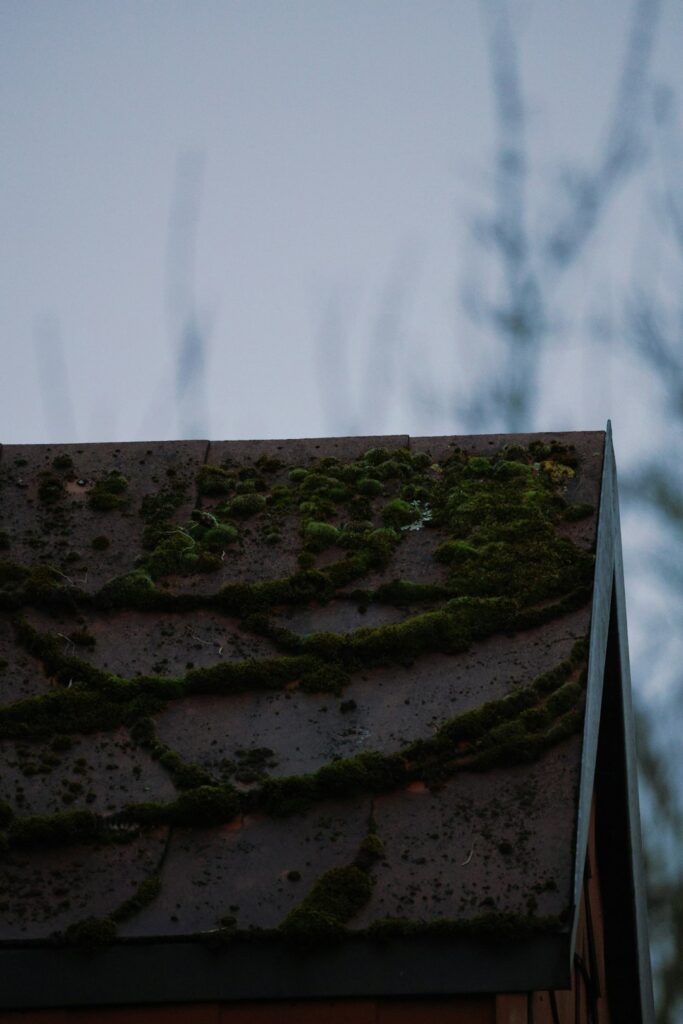
Moss and algae are common roof concerns in Eden, NY, especially where moisture lingers, sunlight is limited, and leaves or branches keep shingles damp. Algae usually appears as dark streaks or stains, while moss forms raised green patches or soft mats. The two growths should not be treated exactly the same because moss can physically disturb roofing materials, while algae is often primarily a surface appearance issue.
How can homeowners tell the difference between moss and algae?
Algae generally creates flat black, gray, green, or brown discoloration across shingles. It may spread gradually down roof slopes but does not usually lift the roofing material by itself.
Moss is thicker and more noticeable. It may look like a green carpet, fuzzy growth, or small clumps along shingle edges, roof valleys, and areas beneath trees. Moss holds water against the roof and can push beneath shingle edges as it expands. That moisture may contribute to premature aging, loosened tabs, and deterioration of the underlying roof deck if the problem continues.
Lichen, which appears crusty or leaflike, is another possibility. It can attach firmly to shingles and is often more difficult to remove without damaging the roofing surface.
Why does roof growth develop?
Moss and algae need moisture, moderate temperatures, and a surface where spores can settle. Conditions that commonly encourage growth include:
- Shaded roof sections, particularly those facing away from the strongest daily sunlight
- Overhanging tree limbs that block airflow
- Leaves, pine needles, and other debris resting on shingles
- Clogged or overflowing gutters that keep roof edges wet
- Poor attic ventilation that allows heat and moisture to accumulate
- Roof slopes with limited drainage
- Aging shingles with a rougher, more weathered surface
The local pattern of cold, snowy winters, wet weather, and seasonal freeze-thaw cycles can leave roofing materials damp for extended periods. A roof that dries quickly after rain is less likely to develop persistent growth than one covered by shade and debris.
Does moss or algae mean the roof needs to be replaced?
No. Growth alone does not prove that a roof has reached the end of its service life. A roof should be evaluated based on several conditions, including shingle age, granule loss, curling, cracking, exposed fasteners, damaged flashing, and signs of water intrusion.
Algae stains may remain even after the organisms are no longer active. Dark streaks are often unattractive but may not indicate serious structural damage. Moss deserves closer attention because it can lift or displace shingles and retain moisture against them.
Inside the home, watch for:
- Brown or yellow ceiling stains
- Damp attic insulation
- Musty odors near the upper floors
- Peeling paint or damaged drywall
- Daylight visible through the roof deck
- Water marks that become worse after rain or snowmelt
These signs suggest that the issue may involve more than surface growth.
What is the safest way to remove moss and algae?
Roof cleaning should be gentle. High-pressure washing can strip protective granules from asphalt shingles, break fragile edges, force water beneath laps, and damage flashing or sealant. Scraping aggressively with a shovel, stiff brush, or metal tool can cause similar problems.

For light growth, a low-pressure application of an appropriate roof-cleaning solution may kill algae and loosen moss over time. Any product should be used exactly as its label directs and checked against the roofing manufacturer’s care instructions. Some roofing warranties restrict certain chemicals or cleaning methods.
When rinsing is appropriate, water should flow from the ridge toward the eaves rather than upward beneath the shingles. Runoff should also be managed carefully because cleaning solutions can affect plants, soil, pets, and nearby surfaces.
A roof is not a safe work surface when it is wet, steep, icy, or covered with moss. Falls are a serious hazard, and the risk increases near roof edges, skylights, dormers, and overhead electrical equipment. Ground-level cleaning and inspection are safer for many homeowners. Conditions involving steep slopes, fragile roofing, suspected leaks, or extensive moss may require someone trained and equipped for roof work.
Should moss be pulled off by hand?
Not usually. Pulling or raking established moss can remove shingle granules, tear the mat, or lift the shingle itself. It can also leave roots or attachment structures behind, allowing the growth to return.
If moss has already been treated and has loosened naturally, limited removal may be possible with a soft brush used carefully in the direction of the roof slope. The goal is to avoid lifting shingle edges. Never scrub upward against the laps of asphalt shingles.
How can future growth be reduced?
Prevention focuses on keeping the roof cleaner, drier, and better ventilated.
Trim branches far enough away to allow sunlight and airflow to reach the roof. Do not allow limbs to rub against shingles during windy weather. Clear leaves and needles from roof valleys and gutters, especially after autumn storms. Gutters and downspouts should direct water away from the foundation without overflowing at the roofline.
Check the attic for adequate ventilation and insulation. Excess indoor moisture can condense on the underside of the roof deck, especially during cold weather. Bathroom and kitchen exhaust should vent outdoors rather than into the attic.
Metal strips near the ridge are sometimes used to discourage future moss and algae growth as rain carries small amounts of metal down the roof. These systems are not suitable for every roof, and they do not replace debris removal, ventilation, or repairs. They also should not be installed in a way that damages shingles or flashing.
What should be checked after cleaning?
A post-cleaning inspection should look for more than remaining discoloration. Check whether shingles are still flat and properly aligned. Look for missing granules in gutters, exposed nails, lifted edges, cracked sealant, damaged flashing, and areas where moss remains attached.
Observe the roof again after the next heavy rain. Water should move into the gutters without backing up, spilling over, or collecting in valleys. Inside the attic, check for damp insulation, fresh stains, or moisture around roof penetrations.
If growth returns quickly, the underlying cause may be shade, trapped debris, poor drainage, or excess moisture rather than an ineffective cleaning product. Addressing that condition is usually more useful than repeatedly treating the visible growth.
Are roof-cleaning chemicals safe for the surrounding property?
They can cause damage if mixed, overapplied, or allowed to remain on plants and finished surfaces. Never mix chlorine-based products with ammonia, acids, or other cleaners because dangerous fumes can result. Protect or thoroughly rinse vegetation, siding, windows, painted surfaces, and metal fixtures according to the product instructions.
Cleaning should also be planned around weather. Rain immediately after treatment can dilute and spread the solution, while strong wind can carry spray beyond the intended area. A calm, moderate-weather period is generally easier to control than a stormy or very hot day.
A careful approach distinguishes harmless staining from active moss, avoids damaging the shingles during removal, and corrects the moisture conditions that allowed the growth to develop.
