

A roof is made up of several connected systems, not just the visible shingles. Understanding common roofing terms helps homeowners in Eden, NY recognize maintenance needs, describe problems accurately, and make better decisions after wind, snow, ice, or heavy rain.
What are the main parts of a roof?
The roof includes both visible materials and structural components beneath them. Each layer has a separate job.
- Roof deck: The roof deck is the solid surface attached to the rafters or trusses. It is commonly made from plywood or oriented strand board. Shingles, underlayment, and other roofing materials are installed above it.
- Rafters and trusses: These are the structural members that support the roof deck. Rafters are individual sloped beams, while trusses are engineered assemblies with several connected members.
- Roof covering: This is the exposed outer material, such as asphalt shingles, metal panels, slate, or another roofing product.
- Underlayment: Underlayment is a water-resistant layer placed between the roof deck and the roof covering. It provides added protection if water gets beneath the outer roofing material.
- Flashing: Flashing consists of thin pieces of metal or other durable material installed around areas where water could enter, including chimneys, roof edges, walls, valleys, and plumbing pipes.
A roof can appear intact from the ground while having problems in the deck, flashing, or underlayment.
What is roof pitch, and why does it matter?
Roof pitch describes how steeply a roof rises compared with its horizontal distance. A roof with a 6:12 pitch rises six inches for every twelve inches of horizontal run.
Pitch affects several practical issues:
- How quickly rain and melting snow drain
- Which roofing materials are suitable
- How much snow may remain on the roof
- How difficult the roof is to walk on
- How the roof handles wind and water
Low-slope roofs are not completely flat. They are designed with a slight incline so water can move toward drains or roof edges. A roof with a steep pitch generally sheds water and snow more quickly, but it may also have more exposed surfaces and harder-to-access areas.
What are eaves, rakes, ridges, and valleys?
These terms describe specific roof edges and intersections.
- Eave: The lower horizontal edge of a sloped roof, usually above the exterior wall.
- Rake: The sloped edge running from the eave to the ridge.
- Ridge: The highest horizontal line where two sloped roof sections meet.
- Valley: The inside angle where two roof slopes meet. Valleys collect and direct a significant amount of water.
- Hip: An outside diagonal angle where two roof slopes meet.
- Gable: The triangular wall section beneath the two sloping sides of a roof.
Valleys and roof-to-wall intersections deserve particular attention because they handle concentrated water flow. Leaves, ice, and debris can also collect in these areas.
What is roof ventilation?
Roof ventilation allows air to move through the attic or roof assembly. A balanced ventilation system commonly brings air in through soffit vents and allows warm, moist air to escape near the ridge or through other upper vents.
Common ventilation terms include:
- Soffit vent: An intake vent installed under the eave.
- Ridge vent: A long exhaust vent installed along the roof ridge.
- Gable vent: A vent placed in a gable wall.
- Box or static vent: A non-powered exhaust vent installed near the upper roof area.
- Powered attic ventilator: A fan designed to move air through an attic.
Ventilation is not the same as insulation. Ventilation moves air, while insulation slows heat transfer. Both affect attic conditions, but adding vents without providing proper intake airflow may not solve a moisture or heat problem.
In the local climate, temperature changes can create condensation in cold attic spaces. Moisture may come from bathrooms, kitchens, clothes dryers, or air leaks in the ceiling below. Dark stains, damp insulation, frost, or musty odors in an attic can indicate a ventilation or moisture-control issue.
What is flashing, and where is it used?
Flashing directs water away from vulnerable joints. It is commonly found around:
- Chimneys
- Skylights
- Plumbing vent pipes
- Dormers
- Sidewalls
- Roof-to-wall transitions
- Valleys
- Eaves and rakes
Step flashing is installed in individual pieces along the side of a wall or chimney. Counterflashing is placed over or into the masonry or wall surface to help cover the upper edge of the flashing below.
A roof leak does not always appear directly beneath the failed flashing. Water can travel along the roof deck, rafters, or insulation before becoming visible inside the home.
What are ice dams?
An ice dam is a ridge of ice that forms along a roof edge and prevents melting snow from draining normally. Water can collect behind the ice and move beneath shingles or into roof and wall assemblies.
Ice dams are usually related to uneven roof temperatures, warm air leakage into the attic, insufficient insulation, limited ventilation, or weather conditions that allow repeated melting and refreezing. They are not simply caused by having snow on the roof.
Signs may include:
- Icicles combined with thick ice along the eave
- Water stains near exterior walls or ceilings
- Wet insulation
- Peeling paint near upper-floor walls
- Ice buildup around gutters
Removing snow or ice from a roof can be dangerous and may damage shingles. Walking on an icy roof is especially hazardous.
What do shingle, granule loss, blistering, and curling mean?
Shingles are overlapping pieces that form the roof’s outer water-shedding layer. Asphalt shingles contain a fiberglass mat, asphalt coating, and mineral granules.
- Granule loss: Granules may appear in gutters or near downspouts. A small amount of loose material can occur, but widespread loss may expose the asphalt layer.
- Curling: Shingle edges or corners turn upward or downward. Curling can result from age, heat, moisture, installation problems, or poor attic conditions.
- Cracking: Shingles may develop surface cracks or splits from weathering and movement.
- Blistering: Small raised areas can form when gases or moisture become trapped in the shingle. Blisters may worsen if disturbed.
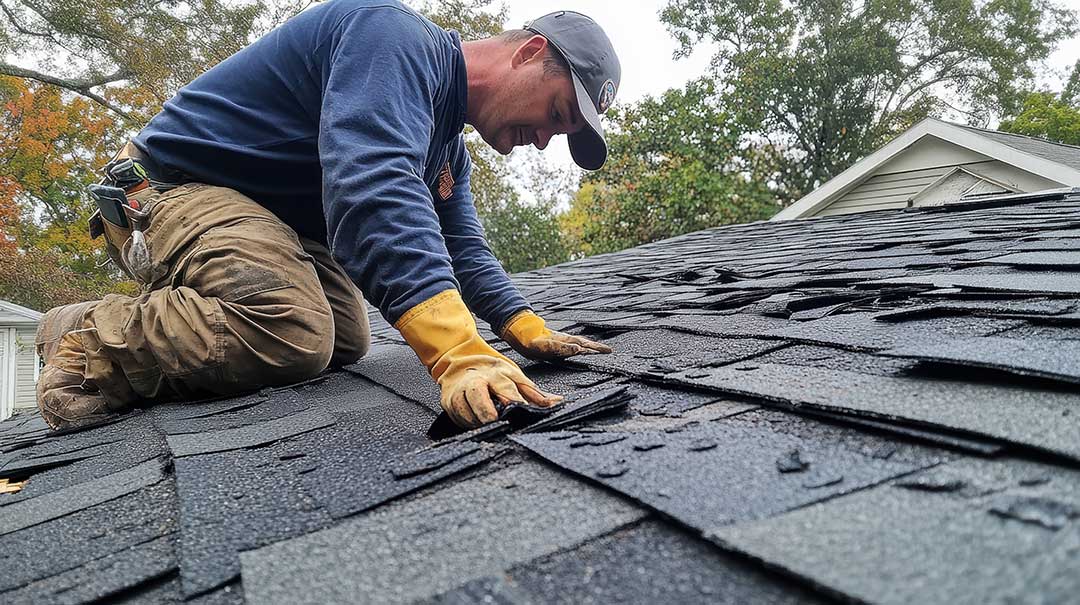
- Missing shingles: Open areas can allow water to reach the underlayment and roof deck.
A few damaged shingles do not always indicate that the entire roof has failed. The cause, location, age of the roof, and condition of surrounding materials all matter.
What does roof replacement involve beyond new shingles?
A roof replacement may include removal of the existing roof covering, inspection of the roof deck, replacement of damaged decking, installation of underlayment and flashing, and installation of the new outer material.
Homeowners may hear terms such as:
- Tear-off: Removal of existing roofing materials.
- Overlay or re-roof: Installing new shingles over an existing layer.
- Roof deck repair: Replacing sections of deteriorated or structurally unsound decking.
- Drip edge: A metal edge component that helps direct water away from the deck and fascia.
- Fascia: The vertical board along the roof edge, often behind the gutters.
- Soffit: The underside of the eave, which may contain ventilation openings.
An overlay may be limited by local requirements, roof condition, material compatibility, or the number of existing layers. Damaged decking or concealed moisture cannot be evaluated fully without examining the underlying assembly.
Which roof problems require prompt attention?
Active leaks, exposed roof decking, large areas of missing shingles, sagging roof lines, damaged flashing, and water entering near electrical equipment deserve prompt attention. A sag may indicate a structural concern rather than a simple surface defect.
After severe weather, a cautious ground-level inspection can look for missing materials, displaced vents, fallen branches, dented metal, and debris. Roof surfaces should not be climbed without appropriate training and safety equipment.
Understanding these terms makes roof observations more useful. Instead of describing a vague “bad spot,” a homeowner may be able to identify a missing shingle, damaged flashing, blocked valley, leaking pipe boot, or moisture stain near a soffit. That level of detail can help clarify what is happening and which parts of the roof need closer evaluation.
