
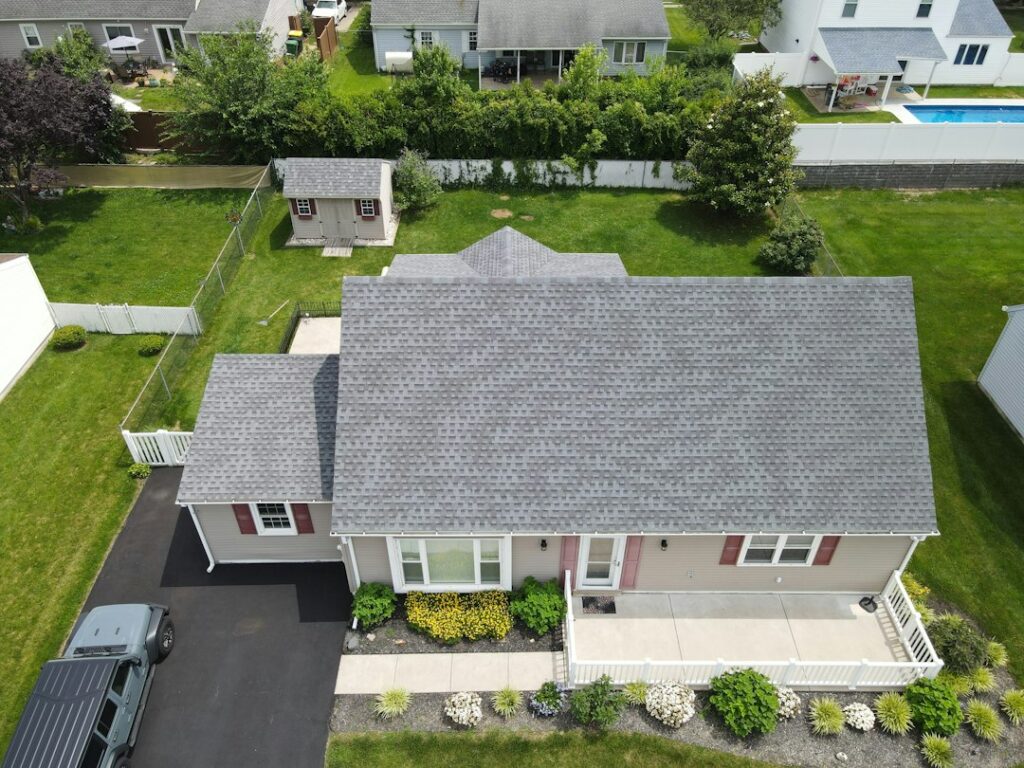
How can severe wind damage a roof?
Severe wind can damage a roof by lifting shingles, loosening flashing, tearing away edge materials, breaking branches onto the surface, or exposing areas beneath the roofing system to rain. Damage may be obvious immediately, but smaller problems can remain hidden until the next storm or a period of heavy rainfall.
In Eden, NY, roof wind damage can occur during strong thunderstorms, downbursts, winter wind events, and storms that combine wind with rain, hail, or falling tree limbs. The amount of damage depends on wind speed, direction, roof age, installation quality, exposure, and the condition of nearby trees.
Wind does not need to remove an entire roof to create a serious problem. A few lifted shingles or a displaced piece of flashing can allow water to enter the roof assembly.
Which parts of a roof are most vulnerable?
The edges and transitions of a roof usually experience the greatest wind pressure. Wind can get underneath loose materials and create an upward lifting force.
Commonly affected areas include:
- Shingles along roof edges, eaves, rakes, and ridges
- Ridge caps and hip caps
- Areas around chimneys, vents, skylights, and plumbing penetrations
- Drip edges and metal flashing
- Fascia, soffits, and gutter attachments
- Roofing over porches, additions, garages, and other lower sections
- Roof sections near large trees or open fields
Roof geometry also matters. Complex roofs with multiple slopes, valleys, dormers, or additions have more seams and transition points where wind-driven rain can enter. A simple roof is not automatically protected, but it may have fewer vulnerable connections.
What does wind damage look like from the ground?
Some signs can be seen safely from the yard or from inside the home. Do not climb onto a roof after a storm, especially if surfaces are wet, damaged, or near downed wires.
Look for:
- Shingles that appear raised, curled, cracked, or missing
- Bare or dark patches where roofing material has been removed
- Shingle pieces, metal flashing, or ridge-cap fragments in the yard
- Sagging gutters or downspouts
- Bent vents, damaged chimney covers, or loose exterior trim
- Torn soffits or exposed roof edges
- Water stains on ceilings or upper walls
- Damp insulation, musty odors, or dripping around attic penetrations
- Daylight visible through the attic roof deck
A roof may still look intact from the ground even when wind has loosened shingles. Wind can break the seal between adjacent shingles without creating a large visible gap. This type of damage may become apparent only when rain is driven beneath the roofing material.
Does an older roof suffer more wind damage?
An older roof is generally more vulnerable, but age alone does not determine the outcome. Roofing materials become less flexible over time, and repeated heating, cooling, freezing, and thawing can weaken seals and fasteners.
Previous repairs can also affect performance. A patch may hold well, while poorly secured replacement materials may lift during the next strong gust. Missing granules, brittle shingles, exposed fasteners, and deteriorated flashing are warning signs that wind resistance may be reduced.
The condition of the roof deck matters as well. If past leaks have caused wood to soften or weaken, roofing materials may have less secure support. Moisture damage can remain hidden beneath shingles until wind exposes the affected area.
Can wind damage happen without a tornado?
Yes. Straight-line winds and downbursts can produce significant roof damage without rotating like a tornado. Strong thunderstorm gusts may lift shingles, break large limbs, push debris against the roof, or damage siding and vents.
The storm’s direction can also make a difference. A roof slope facing directly into the wind may experience greater pressure than a sheltered slope. Nearby buildings, trees, and terrain can change wind patterns around a home, sometimes producing concentrated gusts in areas that otherwise seem protected.
A storm does not have to be classified as a tornado or hurricane for a roof to be affected. Localized damage can occur during a short burst of high wind even when neighboring homes appear unaffected.

Why do trees and branches create additional roof risks?
Wind-damaged trees can cause more than impact damage. A branch may puncture shingles or the roof deck, while smaller debris can scrape away protective granules and damage flashing. Even if a tree does not strike the roof, broken branches can block gutters and downspouts, allowing water to back up near roof edges.
Trees that lean toward a house, have dead limbs, or show signs of splitting deserve attention before severe weather. Saturated soil can also reduce root stability, especially after prolonged rain. During a storm, stay away from windows and avoid inspecting trees while wind and lightning are present.
If a tree or power line has fallen onto or near the roof, keep people away from the area. Structural movement, live wires, and unstable limbs can create hazards that are not visible from the ground.
What should residents do immediately after a windstorm?
Safety comes first. Wait until the storm has fully passed and avoid walking beneath damaged trees, loose roofing, or sagging utility lines.
A practical first check includes:
1. Look from the ground for missing materials, visible holes, or fallen debris.
2. Check the attic or upper floors for active leaks, damp insulation, or daylight.
3. Place containers under interior drips if doing so is safe.
4. Move furniture and belongings away from leaking areas.
5. Photograph visible damage from a safe location.
6. Keep temporary coverings and damaged materials from creating additional hazards.
7. Avoid making extensive repairs until the roof’s condition is understood.
If water is near electrical fixtures, turn off power to the affected area only if it can be done safely. Otherwise, leave the area and seek appropriate emergency assistance.
When does roof damage require immediate attention?
A roof issue is urgent when the roof deck is exposed, water is entering living areas, a large section of roofing has lifted, structural components are sagging, or a tree has struck the building. Active leaks can damage insulation, ceilings, framing, and interior finishes even after the weather has cleared.
Minor-looking damage also deserves timely attention if rain is expected. A lifted shingle may not leak during dry weather but can allow wind-driven rain underneath during the next storm. Delayed repairs can make it harder to distinguish the original wind damage from later moisture deterioration.
Residents should also document the date of the storm, the visible conditions, and any interior effects. Clear photographs and written notes can help with maintenance records and insurance discussions without relying on memory after several storms.
How can a roof be better prepared for strong winds?
Preparation is most effective before severe weather arrives. Keep gutters clear, secure loose outdoor items, trim dead branches where permitted, and inspect visible roof edges periodically. Attic ventilation and insulation should also be maintained because moisture and temperature changes can contribute to long-term roof deterioration.
During routine inspections, pay particular attention to:
- Loose or missing shingles
- Exposed or corroded fasteners
- Aging flashing
- Damaged soffits and fascia
- Separated gutters
- Tree limbs that overhang the roof
- Previous repairs that appear loose or incomplete
A roof’s ability to withstand wind depends on the entire system, including shingles, underlayment, flashing, roof decking, fasteners, and edge protection. Strong materials cannot compensate for deteriorated decking or unsecured transitions. Regular observation and prompt attention to small defects can reduce the chance that a later windstorm turns a minor weakness into interior water damage.
