
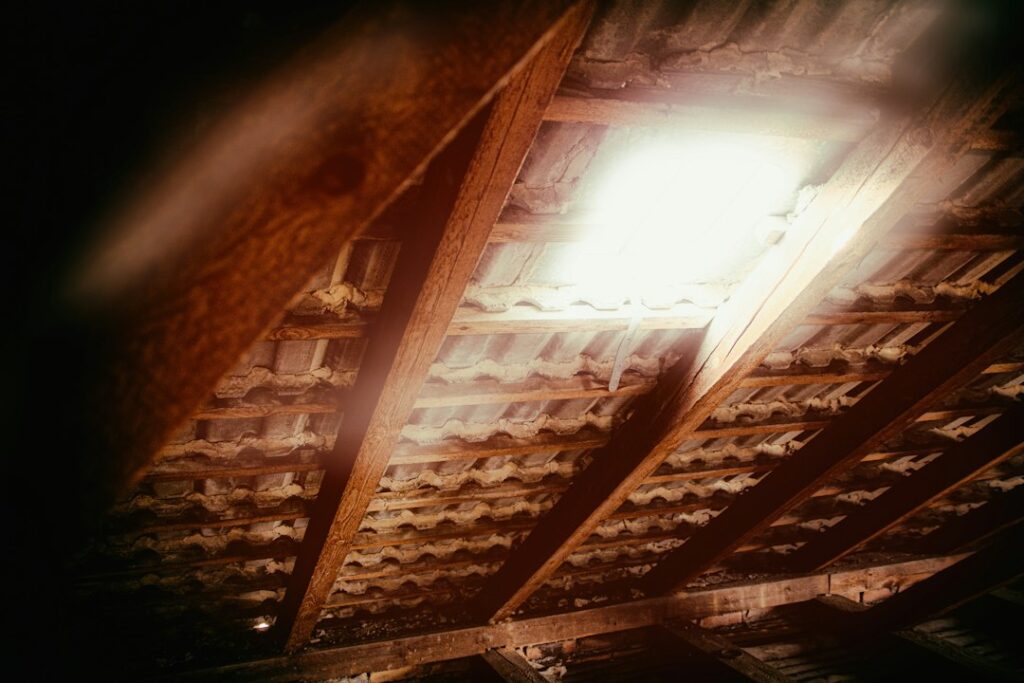
What is roof decking?
Roof decking is the structural layer installed over a home’s roof rafters or trusses and beneath the underlayment and shingles. It creates the solid surface that supports the roofing system and helps transfer the weight of snow, ice, and roofing materials to the underlying structure.
In most homes, decking consists of sheets of plywood or oriented strand board, commonly called OSB. Older houses may also have closely spaced dimensional boards instead of sheet material. The decking is not the visible roof surface, but its condition has a direct effect on how well the rest of the roof performs.
A roof can have intact shingles while the decking below is weakened, stained, or deteriorated. Because the decking is usually covered, problems may not be obvious from the ground.
Why does roof decking matter?
Sound decking supports the roof covering, keeps fasteners securely embedded, and helps maintain the roof’s shape. Damaged decking can allow shingles to loosen, create uneven areas, or permit moisture to move into the attic and upper walls.
Roof decking also contributes to the building’s resistance to changing loads. In Eden, NY, roofs must handle substantial seasonal variation, including snow accumulation, freeze-thaw cycles, wind-driven rain, and periods of high humidity. These conditions can expose weak areas that might remain unnoticed in a milder climate.
Decking is especially important around:
- Chimneys and other roof penetrations
- Valleys where water runoff concentrates
- Eaves and roof edges
- Areas beneath leaking flashing
- Places where ice buildup has repeatedly occurred
- Sections affected by poor attic ventilation
What materials are used for roof decking?
The most common modern decking materials are plywood and OSB.
Plywood is made from thin wood layers bonded together with alternating grain directions. It tends to retain its shape well when exposed to limited moisture, although repeated wetting can still cause swelling, delamination, or decay.
OSB is manufactured from compressed wood strands bonded into panels. It is widely used because it provides consistent coverage and efficient structural performance. If it becomes saturated for an extended period, the edges may swell, and the panel may lose strength.
Older homes may have plank decking made from individual boards. This material can remain serviceable for many decades, but age, knots, splitting, and wide gaps can create challenges when a modern roof covering is installed. The type and spacing of the boards may affect which roofing materials can be applied safely.
How can damaged decking be recognized?
Some warning signs appear inside the home or attic rather than on the roof surface. Possible indicators include:
- Brown or dark stains on attic wood
- Soft, crumbly, or discolored decking
- Musty odors near the roof assembly
- Daylight visible through unexpected gaps
- Sagging between rafters or trusses
- Damp insulation beneath a roof slope
- Nails or fasteners that no longer hold firmly
- Ceiling stains that return after rainfall
From outside, an uneven roof plane, localized depressions, or shingles that appear wavy may suggest an underlying issue. These signs do not always prove that the decking is damaged, since ventilation, framing, installation, or shingle problems can create similar symptoms.
A small ceiling stain also does not necessarily correspond to the location of the roof defect. Water can travel along rafters, decking, insulation, or framing before becoming visible indoors.
Does roof decking always need to be replaced during a reroof?
No. Roof decking does not automatically require replacement whenever shingles are replaced. Sections that are dry, structurally sound, and able to hold roofing fasteners may remain in place.
Replacement is generally considered when a panel or board is:
- Soft or weakened by rot
- Severely swollen or delaminated
- Split in a way that affects support
- Loose or detached from the framing
- Damaged by a long-term leak
- Unable to hold fasteners properly
- Installed with openings or defects that compromise the roof assembly

The decision should be based on the actual condition of the wood, not simply its age or appearance. Some older decking is structurally solid, while newer material can deteriorate quickly after a persistent leak.
Why can decking problems be missed before work begins?
Much of the decking is hidden beneath underlayment and shingles. A ground-level inspection may identify general roof wear but cannot reliably confirm the condition of every panel.
Even a close visual inspection may not reveal damage that is covered by roofing materials. During roof work, areas around leaks, valleys, eaves, and penetrations may show more clearly whether the wood remains sound. Walking on weakened decking can also be hazardous, particularly near skylights, roof edges, and sections affected by water damage.
For safety, attic inspections should be approached carefully. Roof framing may be difficult to navigate, insulation can conceal openings, and some areas may not support a person’s weight. A soft spot in decking should never be tested by stepping directly on it.
How does moisture damage roof decking?
Moisture is the primary cause of decking deterioration. Water can enter through damaged shingles, failed flashing, exposed fasteners, blocked drainage paths, or ice-related conditions. Condensation from inadequate attic ventilation can also dampen the underside of decking even when the roof covering appears intact.
A single minor leak may dry without causing lasting structural damage. Repeated or prolonged wetting is more serious. Wood can absorb moisture, swell, lose strength, and eventually develop fungal decay. In cold weather, water absorbed into materials may freeze and expand, adding stress to already weakened areas.
Proper attic airflow helps reduce condensation, but ventilation is not a substitute for repairing an active roof leak. Likewise, replacing a damaged panel without addressing the source of moisture can allow the problem to return.
How does snow affect roof decking in the area?
Snow adds weight to the entire roof structure, including the decking, rafters, trusses, and connections. A roof designed for local conditions should be able to carry expected snow loads, but accumulated snow can still reveal weaknesses caused by water damage, altered framing, or previous repairs.
Uneven snow distribution may place different loads on different roof sections. Wind can move snow into drifts near changes in roof height, valleys, dormers, and other obstructions. Ice buildup along eaves can also contribute to water backup beneath roofing materials.
Residents should watch for unusual roof sagging, new interior cracking, doors that suddenly stick near upper floors, or repeated leaks during snowmelt. These symptoms require prompt attention because they may involve more than the roof covering alone.
Can new shingles be installed over damaged decking?
Roofing materials should not be installed over decking that is too weak, unstable, or deteriorated to support them. Shingle fasteners need a reliable wood surface, and the roof covering must lie on a reasonably even base.
Covering damaged decking may hide the problem temporarily, but it can leave the roof vulnerable to movement, leaks, and further structural deterioration. The finished roof may also show uneven areas if the underlying panels are swollen or sagging.
Building requirements can affect acceptable materials, fastening patterns, ventilation, and repair methods. Any work involving structural changes, extensive replacement, or unusual existing conditions may require checking current local requirements before construction begins.
What should homeowners ask about roof decking?
Useful questions include:
- What type of decking is present?
- Are there visible signs of moisture damage?
- Which areas are weakened, and why?
- Is the source of the moisture identified?
- Can sound existing decking remain?
- How will replacement panels be supported and fastened?
- Will attic ventilation or flashing conditions need correction?
- Are there signs of framing damage beneath the decking?
Understanding the answers helps distinguish a localized repair from a broader roof-system problem. The decking is only one layer, but it is the foundation for the layers installed above it.
